
If you’re considering mole removal in Totnes, Plymouth or Exeter, choosing an experienced practitioner is important for both cosmetic results and your peace of mind. Whether a mole catches on clothing, affects your confidence, or has changed in appearance, professional assessment from your GP or dermatologist is the first step. Once the mole is deemed safe for cosmetic removal, that’s where we come in.
At Natural Body Sculpt, we provide safe and professional skin mole removal for clients across Totnes, Plymouth and Exeter. Our focus is on delivering excellent cosmetic outcomes.
What Is a Skin Mole?
A skin mole, also called a melanocytic naevus, is a common growth made up of pigment-producing cells. Most people have between 10 and 40 moles, and many develop during childhood and early adulthood.
Moles can vary in:
- Size
- Colour
- Shape
- Texture
- Whether they are flat or raised
Most moles are harmless, but it’s important to monitor them for any changes.
Why Do People Choose Mole Removal?
There are many reasons people decide to have a mole removed.
Cosmetic Reasons
Many clients simply want a mole removed because they dislike its appearance, particularly if it is on the:
- Face
- Neck
- Chest
- Arms
- Legs
Professional removal can help improve confidence while aiming to minimise scarring.
Comfort
Raised moles can become irritated by:
- Clothing
- Jewellery
- Shaving
- Sports equipment
- Hair brushing
Removing an irritating mole can prevent ongoing discomfort.
Changes in a Mole
If you’ve noticed a mole changing in size, shape, colour, or texture, or if it has started bleeding, itching, or crusting, it should be assessed promptly by a GP or dermatologist before considering cosmetic removal.
Signs That a Mole Should Be Checked
Use the ABCDE guide:
- A – Asymmetry: One half doesn’t match the other.
- B – Border: Edges are uneven or blurred.
- C – Colour: Multiple colours or uneven pigmentation.
- D – Diameter: Larger than around 6 mm or continuing to grow.
- E – Evolving: Any recent change in appearance or symptoms.
Any of these signs should be assessed by a medical professional.
Mole Removal in Totnes
If you’re looking for mole removal in Totnes, we offer a free consultation to assess your concerns and discuss the most suitable treatment options.
Our clinic welcomes clients from Totnes and the surrounding South Hams area who are seeking safe and professional cosmetic mole removal.
Mole Removal in Plymouth
Clients from across Plymouth choose us for our professional approach, attention to detail, and personalised care.
Whether your mole is on your face, neck, body, or elsewhere, we’ll explain the treatment process and expected healing before you decide to proceed.
Mole Removal in Exeter
We also provide mole removal for clients from Exeter, offering convenient appointments and experienced care.
Our aim is to achieve the best cosmetic result possible while ensuring every client understands their treatment options.
What Happens During Mole Removal?
Your consultation will include:
- Assessment of the mole
- Discussion of your medical history
- Explanation of suitable treatment options
- Advice on aftercare
- Opportunity to ask questions
Depending on the type and location of the mole, different removal techniques may be appropriate. We use the Accor Plasma Pen to remove moles, skin tags and milia.
Aftercare
Following treatment, it’s important to:
- Keep the area clean and dry as advised.
- Avoid picking the healing skin.
- Protect the area from sun exposure.
- Follow the aftercare instructions provided by your practitioner.
Good aftercare can help promote optimal healing and minimise scarring.
Frequently Asked Questions
Is mole removal painful?
Procedures are carried out using numbing cream, so discomfort during treatment is usually minimal.
Will there be a scar?
Any procedure that removes skin can leave a scar. However, careful technique and following aftercare advice can help achieve the best possible cosmetic outcome.
Can all moles be removed?
Many benign moles can be removed. However, if a mole shows suspicious features, further medical assessment may be recommended before any cosmetic treatment.
How long does healing take?
Healing times vary depending on the removal method, the size of the mole, and its location, but most areas heal over several weeks.
Book a Mole Removal Consultation
If you’re considering mole removal in Totnes, Plymouth, or Exeter, we’re here to help.
Our experienced team offers professional consultations, personalised advice, and high-quality care from your first appointment through to aftercare.
Contact us today to arrange your consultation and discuss the most suitable treatment for your skin.
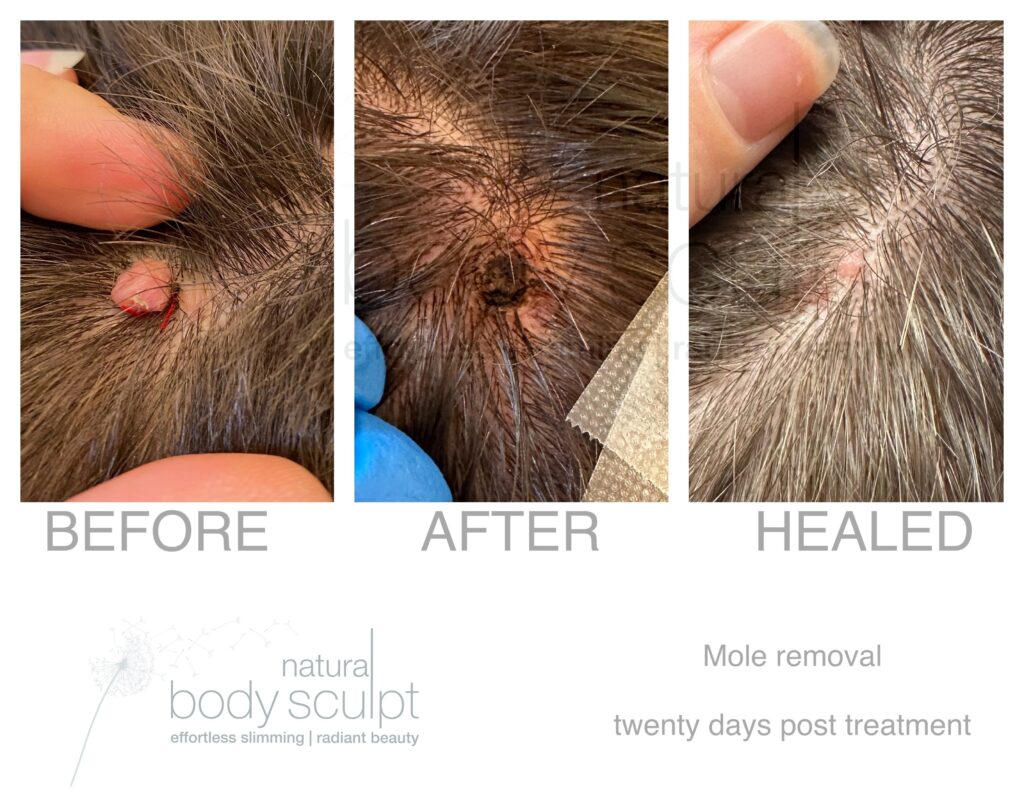
Our client had a large mole on his head, which would constantly catch on everything.
Important Medical Advice
At our clinic, we use plasma pen treatment to remove suitable benign skin moles for cosmetic purposes. Our practitioners are not medically qualified to diagnose or assess moles for skin cancer or other medical conditions. If you have any concerns about a mole, or if it has changed in size, shape, colour, or texture, or has become itchy, painful, crusted, or started to bleed, we strongly recommend that you have it assessed by your GP or a dermatologist before booking treatment. Once a healthcare professional has confirmed that the mole is suitable for cosmetic removal, we will be happy to discuss whether plasma pen treatment is an appropriate option for you.

